Strategic Resilience: Navigating the Middle East's Gas Infrastructure Expansion
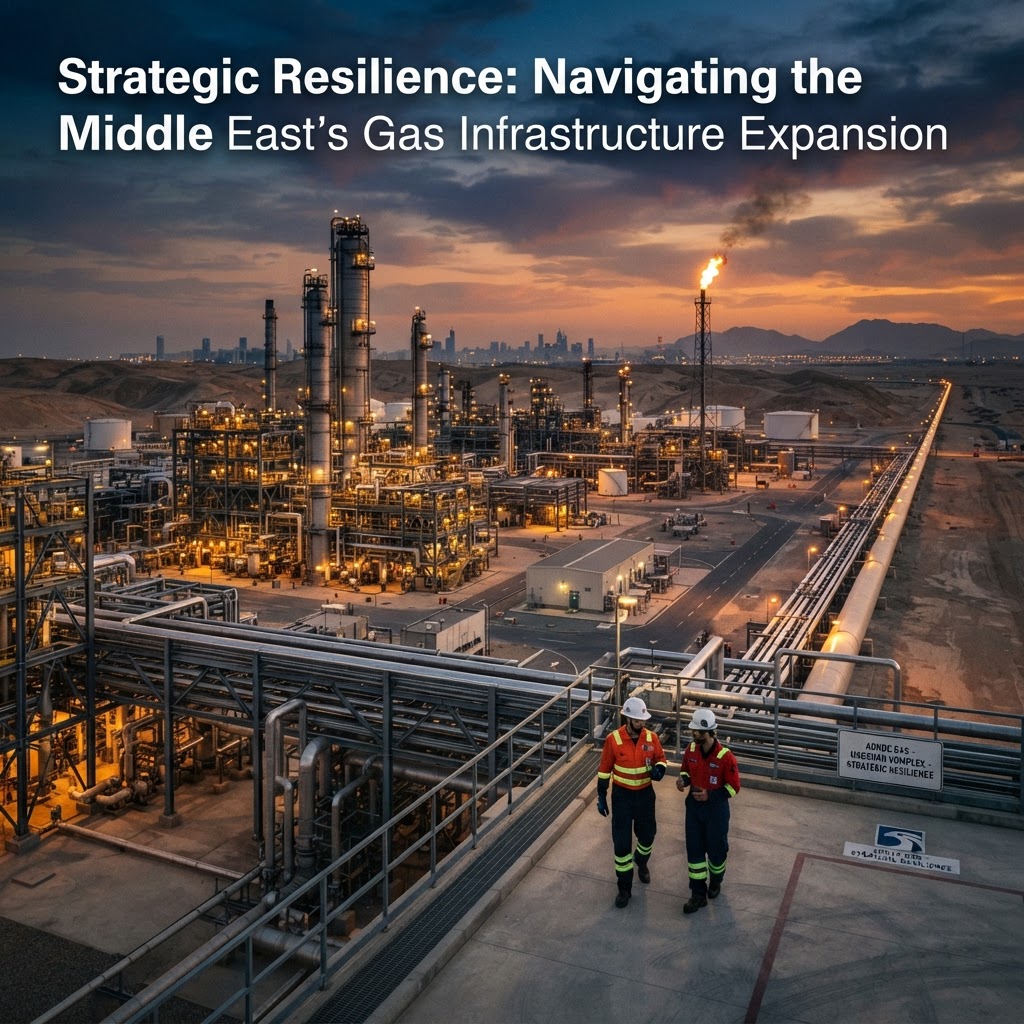
As ADNOC and regional players accelerate multi-billion dollar gas projects, we analyze the engineering challenges and strategic imperatives of securing energy supply chains in a volatile landscape.
The recent surge in capital expenditure across the Middle East, headlined by ADNOC’s $8.2 billion investment in the Rich Gas Development project and the $6.2 billion FID for the Umm Shaif Gas Cap, signals a profound shift in regional energy strategy. As consultants, we observe that this is not merely a capacity expansion; it is a fundamental recalibration of the regional energy portfolio toward gas-centric growth. The involvement of major contractors like McDermott and Technip Energies underscores the technical complexity inherent in these offshore megaprojects, which require cutting-edge surface pressure boosting and integrated gas processing capabilities.
Engineering for Uncertainty
The engineering challenge today is twofold: delivering ultra-complex offshore infrastructure while mitigating the risks of regional supply chain disruptions. With recent reports highlighting the impact of geopolitical volatility on production volumes—such as the outages experienced by Shell in Qatar—the industry is moving toward a 'security-first' design philosophy. This involves not only robust project management but also the strategic diversification of logistics and the hardening of critical assets against external threats.
Furthermore, the competition for skilled labor and specialized engineering resources is intensifying. With an estimated $50-60 billion in reconstruction and new project work currently in the pipeline, the pressure on EPC contractors to deliver on time and within budget has never been higher. For our clients, this necessitates a more rigorous approach to front-end engineering design (FEED) and a proactive stance on supply chain risk management. The ability to execute these projects efficiently will define the competitive landscape for the next decade, separating those who can navigate the 'new normal' of regional volatility from those who remain vulnerable to it.